
Antelope Horn Milkweed (Asclepias asperula)
This US Southwest native herbaceous perennial is also known as Green-Flowered Milkweed and Spider Milkweed. It provides nectar for adult butterflies and serves as a host plant for youthful butterflies (including monarchs!) during the awkward, teenage caterpillar phase.
An Unusual, Elegant Accent in Arid Areas
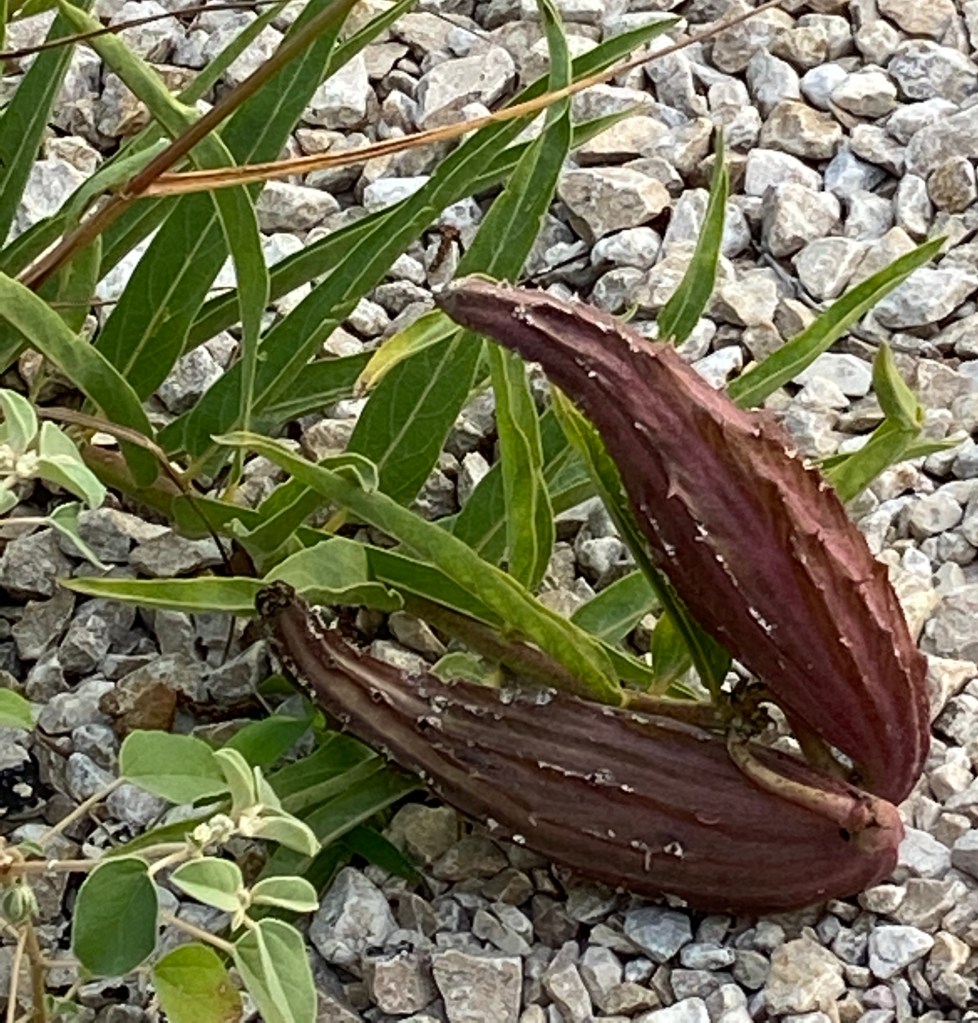
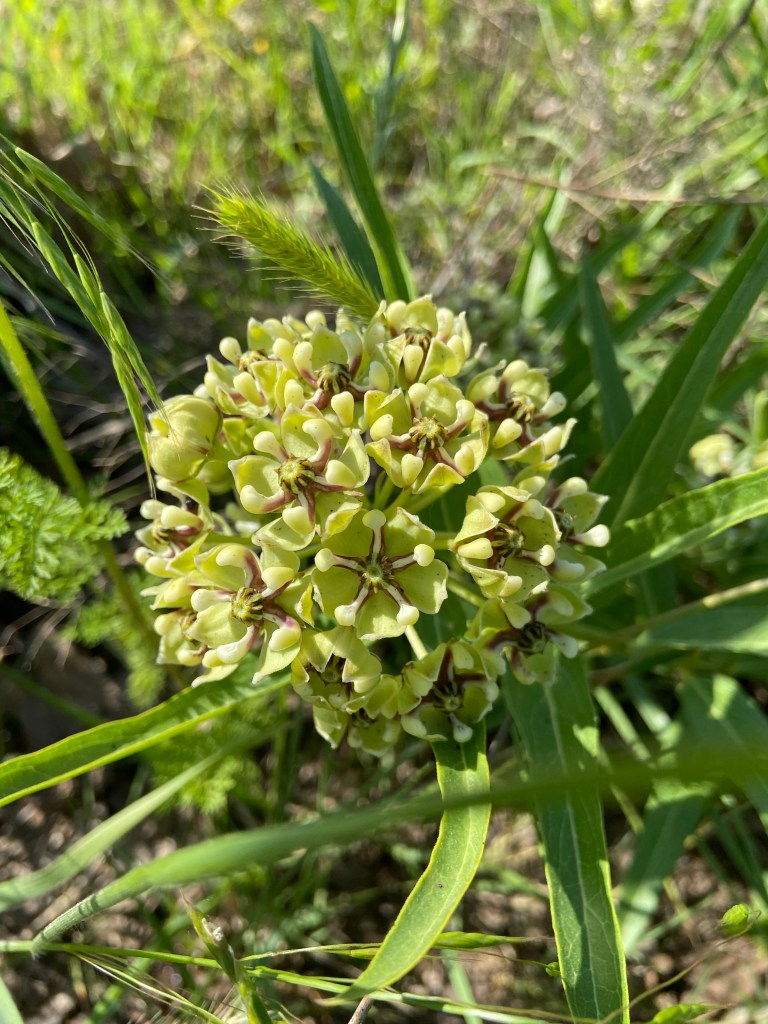
The Antelope Horn Milkweed, named for its long, pointed seedpods that are reminiscent of antelope horns, has some of the most distinctive blossoms of any plant, anywhere. Imagine a golf ball on a tee, as interpreted by a florist. Or perhaps the two-inch spheres will make you think of a funky geodesic dome spacecraft from the planet Sputnik. Dallas denizens will definitely be reminded of Reunion Tower!
The purplish centers of these green and cream-colored blossom balls number as many as twelve per plant, and are beloved by checkerspots, monarchs, and swallowtail butterflies for their plentiful nectar. This milkweed is hardy in the warm, arid USDA zones 5-9, and requires as little as eight inches of moisture per year. It grows to a height of no taller than two feet, and a deep, robust taproot allows it to thrive in full sun and tolerate droughts that would decimate most other plants. Look for it growing wild along roadsides and in dry caliche, loam, sand, and clay soils.
A Crucial Aid to Monarch Migration
Early spring is when the Antelope Horn Milkweed begins to bloom. Besides providing nectar for butterfly sipping, the plant serves as a host plant for monarchs, queens, and soldiers–which means the caterpillars of these butterfly species eat the plant’s leaves. As monarchs begin their northbound migration, the Antelope Horn is by most accounts the most popular milkweed chosen for the depositing of eggs. Gardeners who observe the plant in their plots have noted that they seem to always see at least one caterpillar on the Antelope Horn’s leaves!
The plant’s toxins are ingested by butterfly larvae (caterpillars), rendering them unpalatable to and thus protected from predators. These toxins also make the Antelope Horn a “must-avoid” for deer and other snackers.
The tenacious taproot of the Antelope Horn dictates that the most successful cultivation will happen when the young plant is placed in its garden home as soon as possible. Most containers will not be deep enough for this milkweed to thrive.
A Special Message for Texans
The monarchs who begin the spring migration journey northward are the long-lived, months-old “Methuselah” generation of the species’ lifecycle. These are, in many cases, the very same individual butterflies who passed through Texas on the way to their Mexican overwintering sanctuaries.
These particular monarchs are nearing the end of their lives, and their flagging strength dictates that they lay eggs on one of the first available milkweeds. Quite frequently, this will be an Antelope Horn Milkweed in Texas.
How can you help? To begin with, it’s best to not disturb any Antelope Horn Milkweed you may see growing wild. The long taproot makes transplanting unlikely to be successful. Secondly, add a few of these elegant milkweeds to your own garden beds. Texas’ location adjacent to Mexico puts Texans in a unique position of ability to aid our beloved monarch butterflies!
 headmistress of headlines