Slicker to Hick Blog
When plants attack.
In my pre-rural days, the only literal thorns in my life were on rose stems. Those were easily avoided and forgotten in the excitement of “Flowers! He’s really interested after all!” But now. . .we live in a real-life Game of Thorns and I’m hoping we are wily enough to outsmart the little prickers.
The property we bought had been neglected for years, and one of the first things you noticed from the cocoon of your car was that each of the many trees was surrounded by a puffy skirt of vines and brush. I knew there would have to be significant clearing done around each tree, but I didn’t realize how much I would come to hate the vines.

First look: what’s to hate? Leaves in a thin, heart-ish shape, attractively mottled in green with the occasional sassy red accent. And the name itself–Smilax. Smiling, happy Smilax.
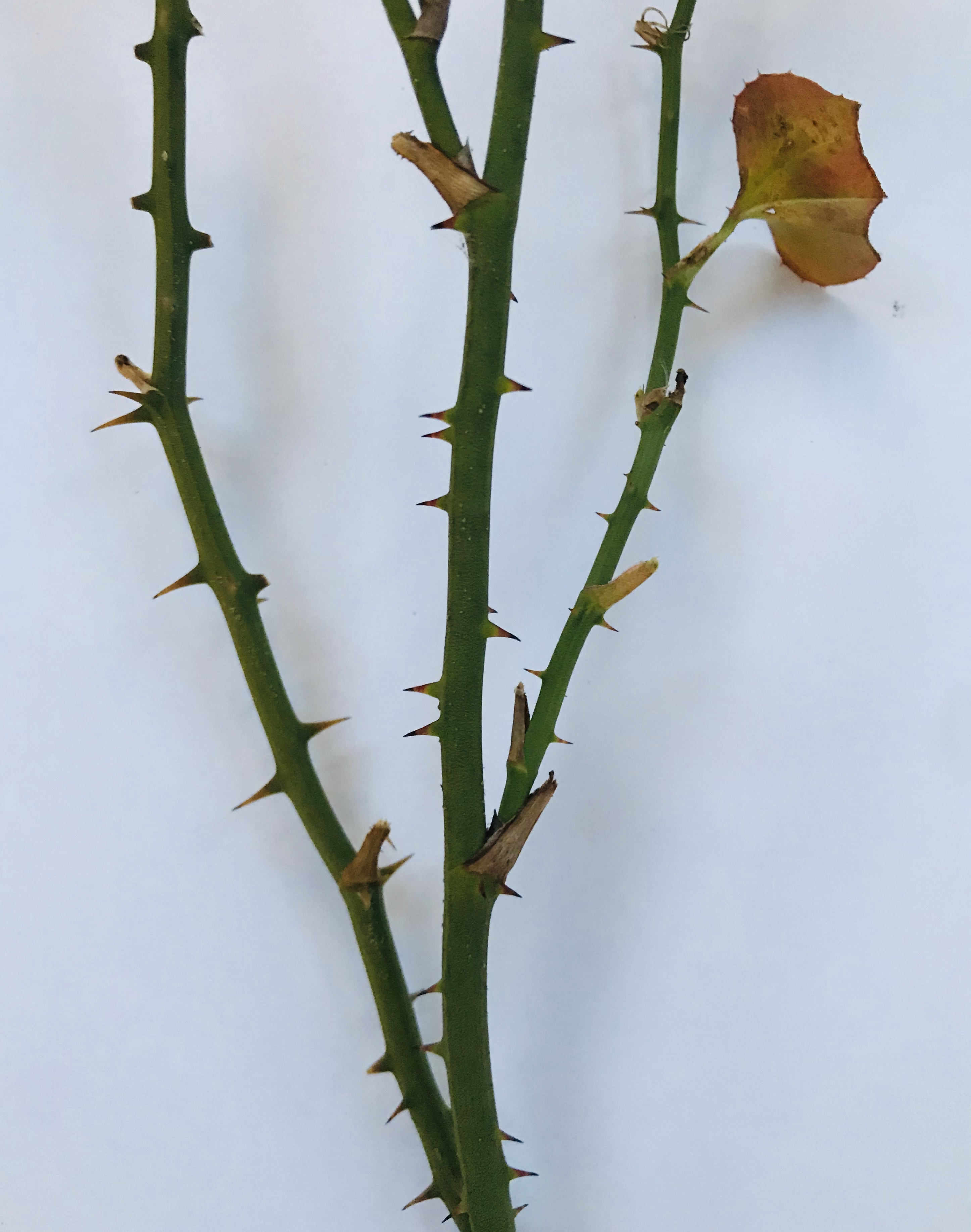
Closer look: see all those thorns? Placed all around the stem at about half-inch intervals or closer? Making it impossible to touch the vine, even casually, without a scratch or puncture wound? It became clear to me that the only one smiling would be the smilax vine itself, smiling in a smug little sneer as it drew yet another bead of blood. Or smirking, as it managed to snag a favorite shirt.
Thorny Smilax vine. I’ve also heard it called briar vine. If its scientific name isn’t Smilax satanicus, it should be. The property is overrun with these specimens. Even the smallest, youngest vines are densely studded with tiny spikes of peril, and each of the hundred or so trees has at least twenty malevolent shoots springing from the ground around it.
So how to eradicate these clinging ropes that will choke the tree to death if left unchecked? The vines’ leaves and stems are very waxy and impervious to herbicide–except in amounts huge enough to kill all nearby trees. Fortunately, they are easily clipped with lopping shears, but then they must be gathered and hauled off. Is that easy? Of course not!
You must grip the Smilax tightly enough to yank it from the thousand arboreal nooks and crannies where it has insinuated itself, but not so tightly that thorns pierce your glove. Many of our vines have had years to snake their way high into their host tree and are at least ten feet long. The vines seem to take particular delight in snapping back to scrape your face as you coil them for their trip to the burn pile. Another favorite trick is to surreptitiously clip you on the back of the ankle, sending a shot of adrenaline to your nerves as your panicked brain screams, “SNAKE! SNAKE! SNAKE!”

And now, we come to the root of this problem plant. Think of a subway. The roots of the Smilax form a subterranean network that channels nourishment to the stems that emerge at regular intervals and tunnel their way up to the sun. At less frequent intervals along the path, there is a swelling in the root like a big underground hub. It may be the brain of the whole enterprise. In any case, it is a horrid, bulbous blob with long, tapering spikes sticking out of it. It looks like Satan’s sweet potato.
But enough negativity! As it happens, the Smilax needs lots of sun to survive, and lopping it to the ground each time the vine emerges makes it weaker and weaker until it finally gives up the ghost. And all those vines harvested so far fueled a smoking hot bonfire in late December.

 headmistress of headlines
You’ve mentioned these briars before, but this exceptional descriptive read has almost made me feel your pain.
LikeLike
Thank you! Glad we stopped short of actual pain–lol!
LikeLike